
C-03 · Selective demolition
Selective demolition
Cut first, then remove. Controlled separations take out what the drawings call for and leave the rest of the structure alone.
C-03.1 · Method
The Conrad approach
Demolition done right starts as a cutting problem. Before anything comes out, we saw-cut isolation lines around the removal area. That one step decides how the rest of the job goes: clean edges, no overbreak into the structure that stays, and pieces sized so the operator knows what each pick weighs before the rigging goes on. Breakers alone shake and crack past the limit line. A kerf stops the damage where the drawings say it stops.
Nothing gets removed before it gets planned. Every scope opens with pre-task planning and a hazard analysis: what's above, what's below, what's live, where the debris path runs. If the removal needs cored pick points or an engineered sequence, that's worked out on paper first, not improvised with a machine running.
The other half of the job is the schedule around us. Selective demo happens on active sites, so we coordinate with site leadership on hours, access, and laydown before we mobilize. Concrete pulled out and left in another trade's way just made somebody a new problem. Our crews stage debris out of circulation paths and leave the edge ready for the next crew, same day where the plan allows it.
C-03.2 · Scope
What we remove
Controlled removals for general, mechanical, fire suppression, and civil contractors across the Denver metro.
Sawn panel & slab removal
Road panels, slab sections, and sidewalks cut to the limit line and lifted out whole. The saw defines the edge; the excavator only handles what's already separated.
Interior & TI demolition
Selective removal for tenant improvements: openings, curbs, and equipment pads taken out of occupied or finished spaces without wrecking the work around them.
Structural modifications
Removals that carry load or sit tight to structure that stays. Engineered sequencing, tight tolerances, and shoring coordination before the first cut.
Debris handling
Pieces sized for the rigging and the haul route from the start. We coordinate haul-off to fit the site plan so debris never stacks up in a live corridor.
Job record
Civil support: road panels out, sewer line in
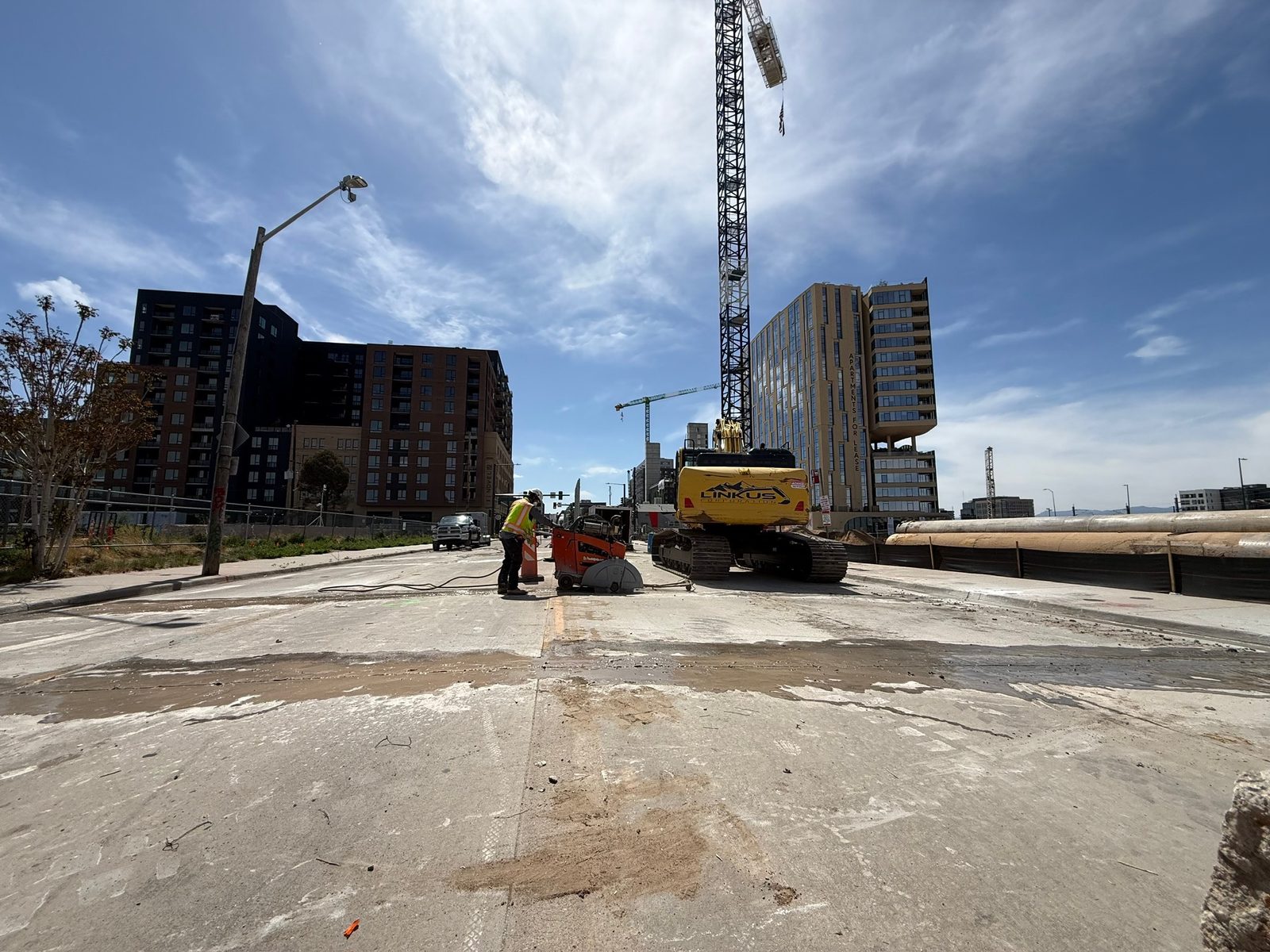
A civil contractor replacing a sewer line under a downtown Denver street needed the road opened without tearing up more pavement than the trench required. That's the job in the photo at the top of this page: panels saw-cut on the trench limits, then lifted out by excavator on a live street with a tower crane working overhead. Tight urban corridor, traffic control on one side, another contractor's schedule on the other. The cut lines meant the panels came out as predictable pieces, and the pavement that stayed kept a clean edge for the patch-back.
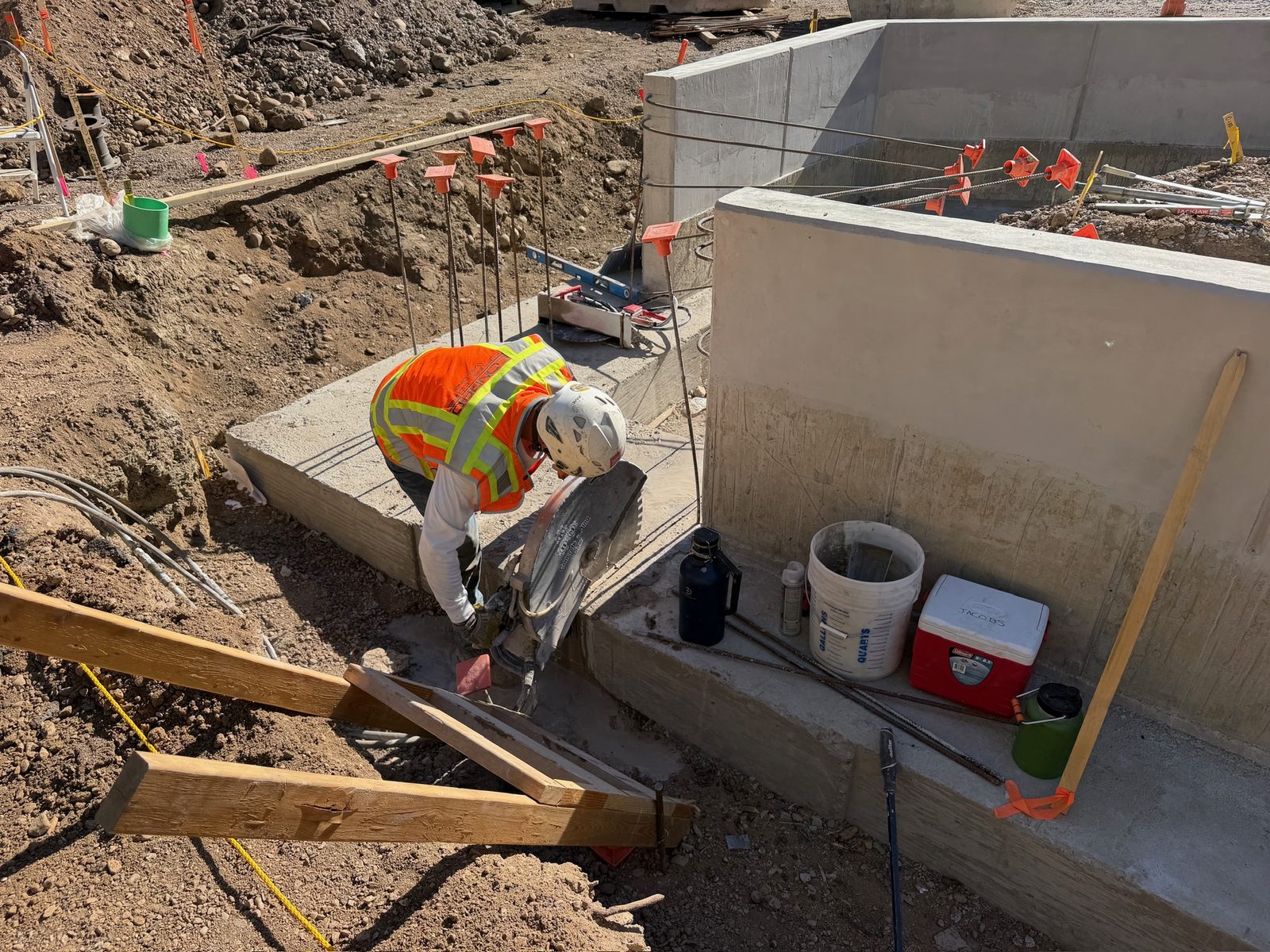
Removal speed matters most when something has gone wrong. On another job, a footer had been formed and poured off the design. We mobilized after hours, cut the bad section free, and removed it overnight. The client formed and poured the replacement the next day. No lost schedule.
C-03.3 · Common questions
Selective demolition FAQ
What is selective demolition vs. full demolition?
Full demolition takes the structure down. Selective demolition removes only what the drawings call out (a slab section, an opening, a curb, a pad) while everything around it stays intact and, in a lot of cases, stays in service. The precision comes from cutting the separation lines first, so the removal can't spread past its limits.
Do you haul the debris?
We cut, break, and size the pieces for rigging and loading, and we coordinate haul-off to fit your site plan, whether that's our coordination with a hauler or loading out to trucks you've arranged. Tell us how you want debris handled when you send the scope and we'll price it that way.
Can you demo inside an occupied building?
Yes. Occupied-space work gets containment, dust control, and off-hours scheduling where the building requires it. We plan the debris path with building management before we start so tenants and other trades keep working. A lot of our TI removal happens in buildings that never close.
Need penetrations instead of removal? See core drilling, or review all services.
Out clean
Plan the removal before the rebuild
Send drawings or a scope description and we'll get you a quote. If it's urgent, call. We answer.