
C-02 · Core drilling
Core drilling
Round, plumb, on-location penetrations for mechanical, plumbing, electrical, and fire-suppression scopes. From 1/2 in. conduit cores to 18 in. and larger openings.
C-02.1 · Applications
What we core
If it goes through a slab, deck, or wall and needs to be round, we drill it. Square openings and linear cuts are saw work; see concrete cutting & sawing.
Plumbing & drainage
Drain and drainage-line cores through slabs and decks. On one waterproofed deck the client wouldn't allow anchor bolts, so we mounted the rig on vacuum pads and drilled the drainage penetrations without a single hole in the membrane.
Electrical & data
Conduit penetrations through walls and elevated decks, single 1/2 in. cores or ganged runs. We drill plumb so the conduit stubs up where your electrician expects it, not an inch off the wall line.
HVAC & mechanical
Duct and pipe penetrations located to the drawing and sized to the sleeve. We walk the layout with your foreman before the bit touches concrete.
Fire suppression
Sprinkler main and branch penetrations, sized and placed to suit tested firestop systems. Your fire-stop sub gets a clean, round annulus every time.
C-02.2 · Job record
Vacuum-pad mounting: coring without anchors
A standard core rig anchors to the slab with drilled bolts. That's fine on structure headed for demo. It's not fine on a waterproofed deck or a finished floor.
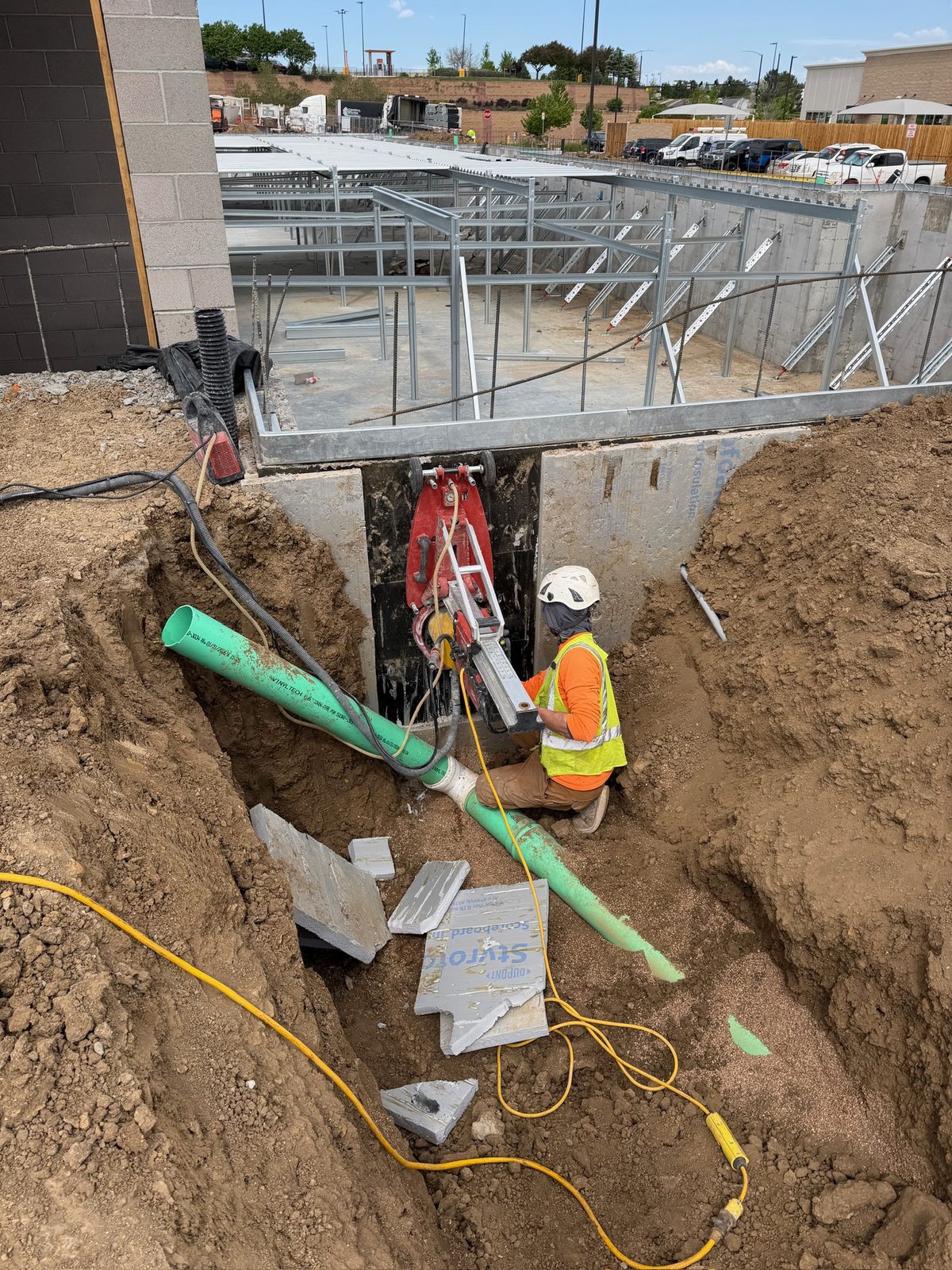
8 in. drainage cores, zero membrane punctures
The client needed drainage penetrations through a deck they had just waterproofed, and they wouldn't allow anchor bolts through the membrane. Fair call. One bolt hole can void the warranty on the whole system.
So we mounted the rig on vacuum pads instead. The pads clamp the drill stand to the deck with suction, no fasteners, and hold it rigid enough to run an 8 in. bit true through the full slab depth. We drilled every drainage core on the job and the membrane came through untouched.
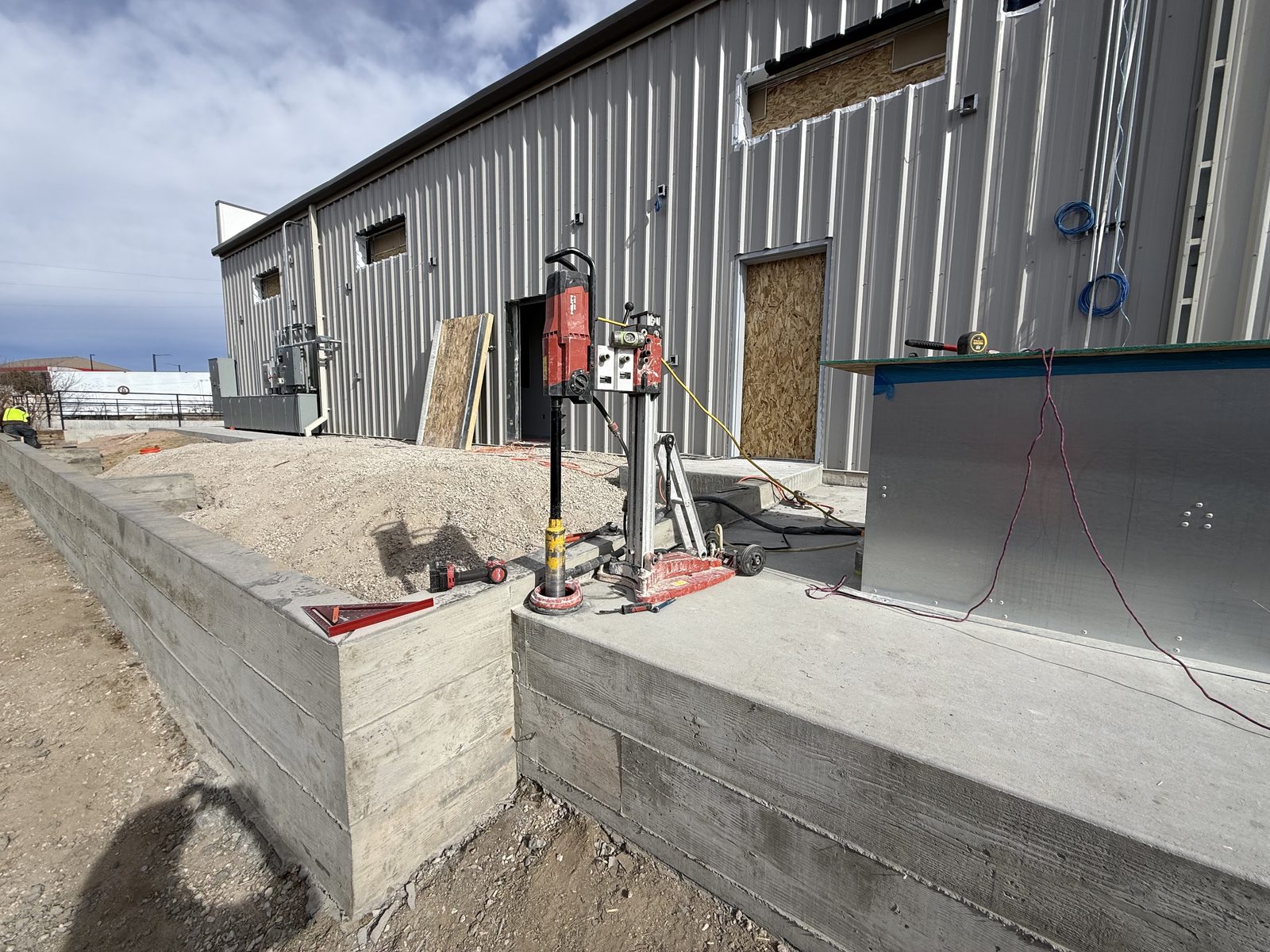
Small-diameter deep coring on a finished site
Not every core is a big one. This drainage line called for a small-diameter core run deep, on a site that was already finished out. Same vacuum-pad setup, plus automatic slurry collection at the hole.
Core drilling is a wet process; the water and cuttings have to go somewhere. On a finished site that somewhere is our recovery system, not the floor. The rig captured the slurry as it drilled, and we left the area the way we found it.
C-02.3 · Fabricate-and-install
From core to complete: the bollard job
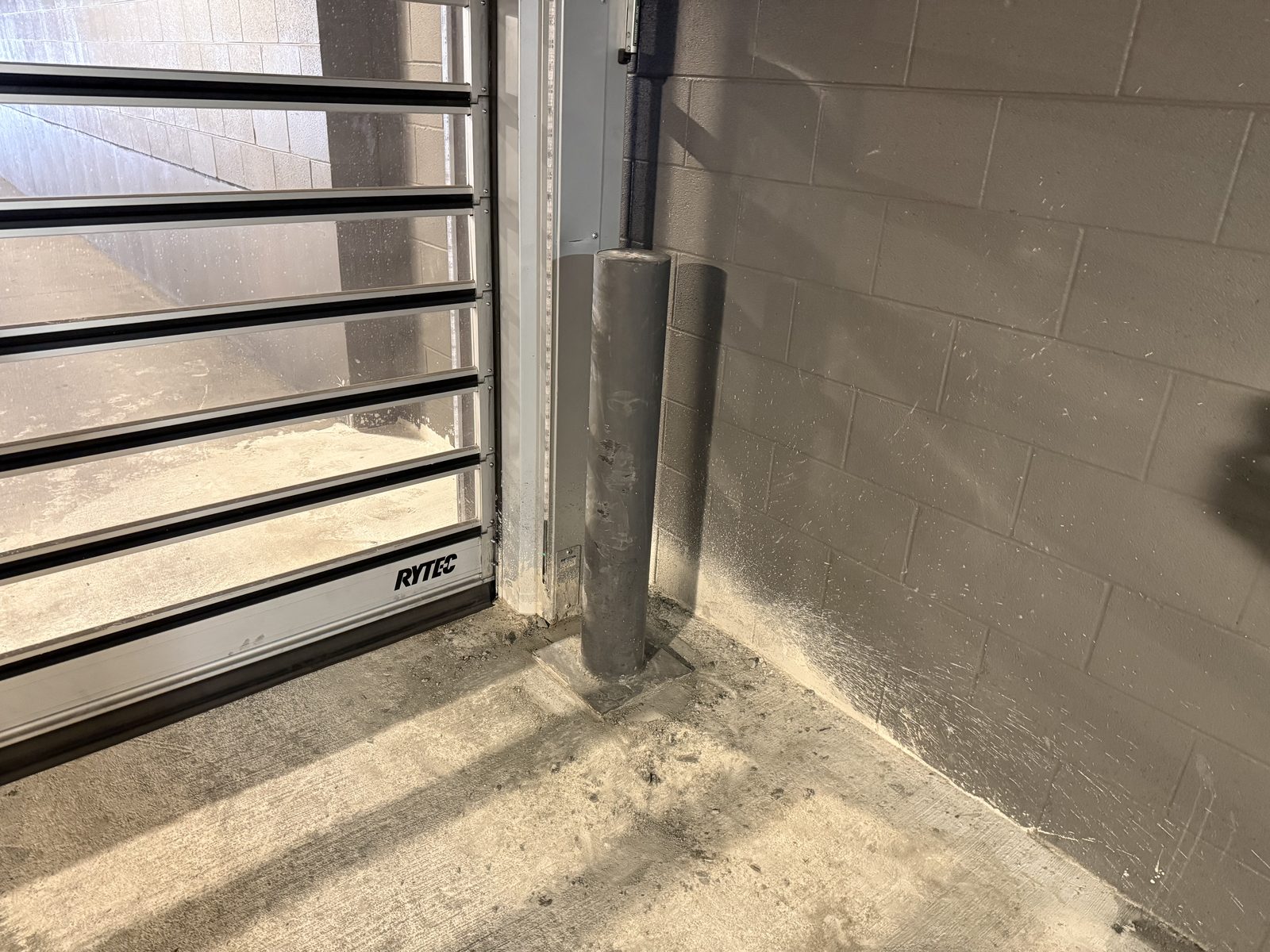
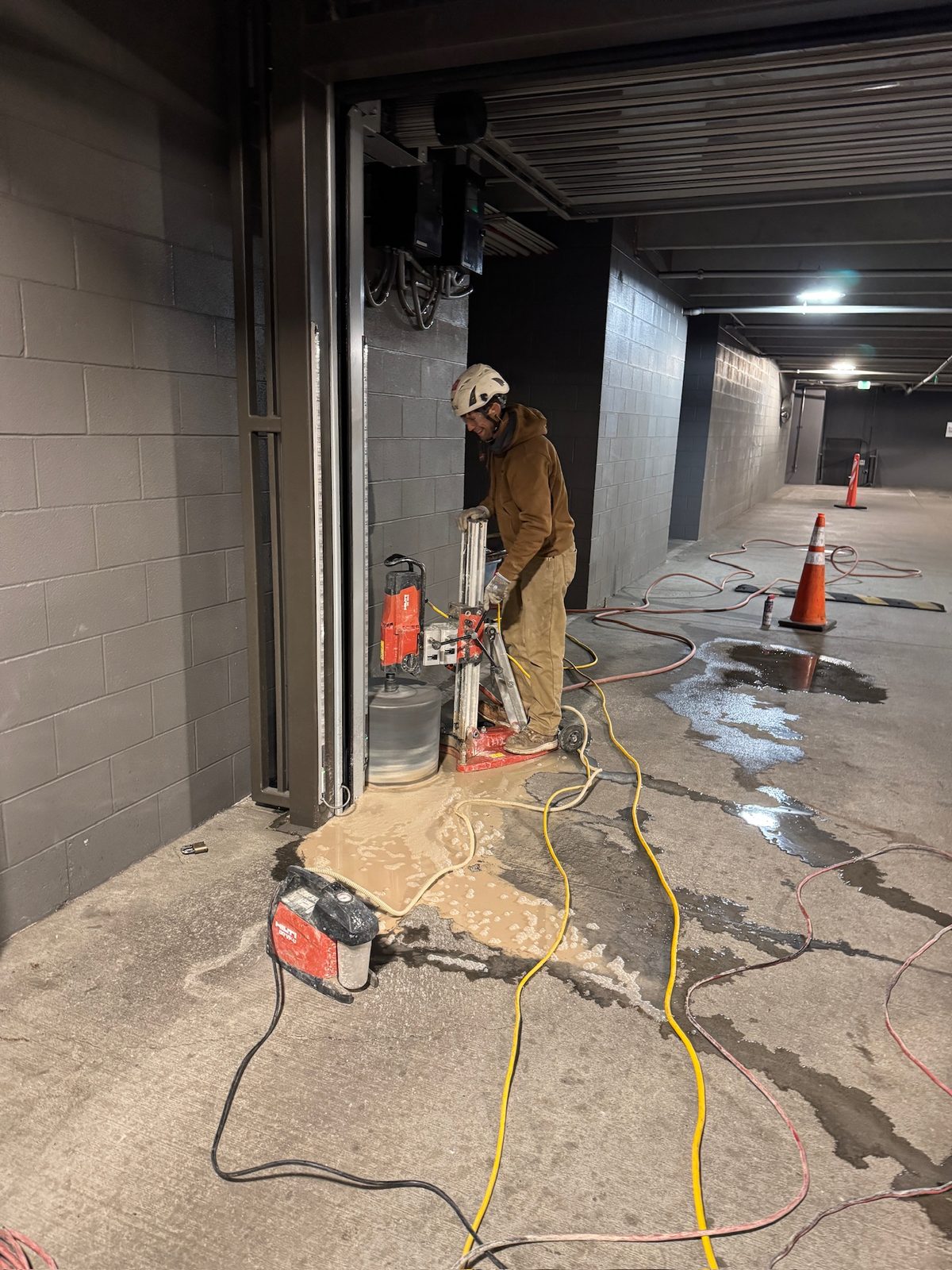
A parking garage needed a bollard protecting a roll-up door track. That starts with an 18 in. core through the garage slab. The hero photo at the top of this page is that core in progress.
Most coring subs would drill the hole and leave. Conrad also runs a structural steel and welding shop, so we fabricated the galvanized bollard to the customer's spec, set it in the core, and installed it. One sub, one mobilization, no handoff between a driller and a steel outfit that have never met.
Coring is one of four scopes we self-perform. The full list is on the services page.
C-02.4 · Core schedule
Core schedule
Typical working ranges for our coring rigs. Send your penetration schedule and we'll confirm bit sizes and mounting for each hole.
| Item | Typical range | Best for |
|---|---|---|
| Diameters | 1/2 in. – 18 in.+ demonstrated; larger by stitch coring | Pipe, conduit, duct, bollards |
| Mounting | Anchor, vacuum pad, wall/ceiling rigs | Membranes and finished surfaces protected |
| Slurry | Automatic collection available | Occupied and finished spaces |
Typical method capabilities, not hard limits. Send your spec and we'll confirm the approach.
C-02.5 · Questions
Core drilling questions
Do I need GPR scanning before coring?
On commercial decks, yes. Rebar, post-tension cables, and embedded conduit get located before the bit touches concrete. Hitting a PT tendon is an expensive day for everyone. We coordinate the scanning as part of the pre-task plan.
Can you core without drilling anchor bolts?
Yes. Our rigs mount on vacuum pads, which clamp to the slab with suction instead of drilled anchors. We've run 8 in. cores this way on waterproofed decks where the client wouldn't allow a single bolt hole through the membrane.
Who handles firestopping the penetration?
Typically your fire-stop or insulation sub. Our part is sizing and locating the core to suit the tested firestop system: the right annular gap around the pipe or conduit so the listed assembly actually applies.
What happens to the slurry?
It gets collected at the hole. Vacuum recovery and containment are standard on interior work. The water and cuttings go into our system, not down your floor drain or across a finished slab.