
C-01 · Cutting & sawing
Cuts on layout, wet-cut clean, in occupied buildings and on open sites across Denver. We work for general, mechanical, and fire-protection contractors who need it right the first time.
C-01.1 · Methods
Three methods cover most cutting scopes in the Denver metro. We pick the saw based on depth, access, and what sits on the other side of the cut.
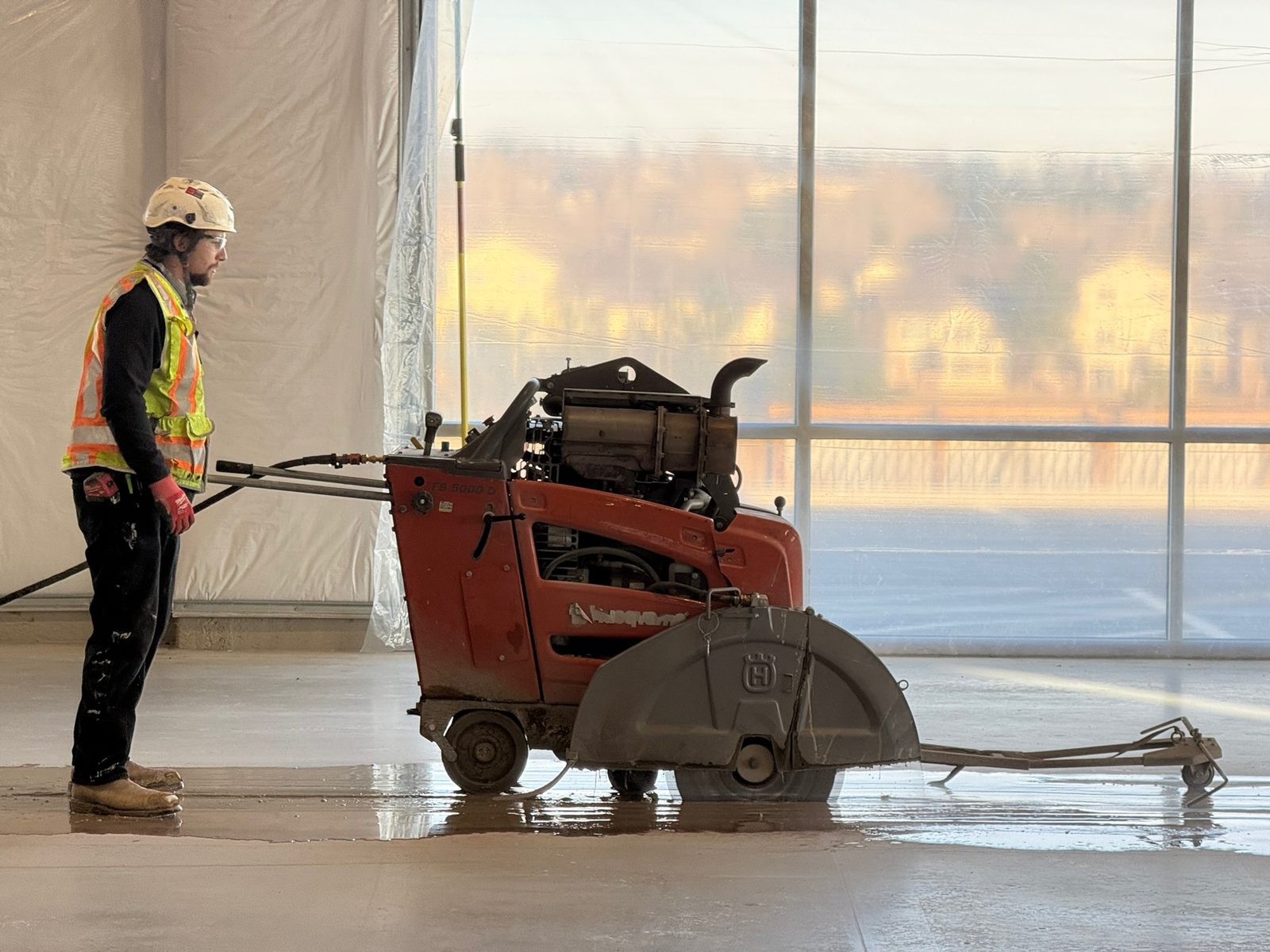
Trench cuts for plumbing and electrical, panel removal, and road cuts. On a recent tilt-up warehouse T.I. we ran wet trench cuts through the slab on layout, and the plumbing crew was in the trench the next morning. That's the standard: cut it once, cut it where the drawings say.
Track-mounted sawing for doorways, windows, and mechanical openings in walls. Square corners without overcuts, depths held to what the engineer approved. If the opening needs to look like it was formed there, wall sawing is how it gets done.
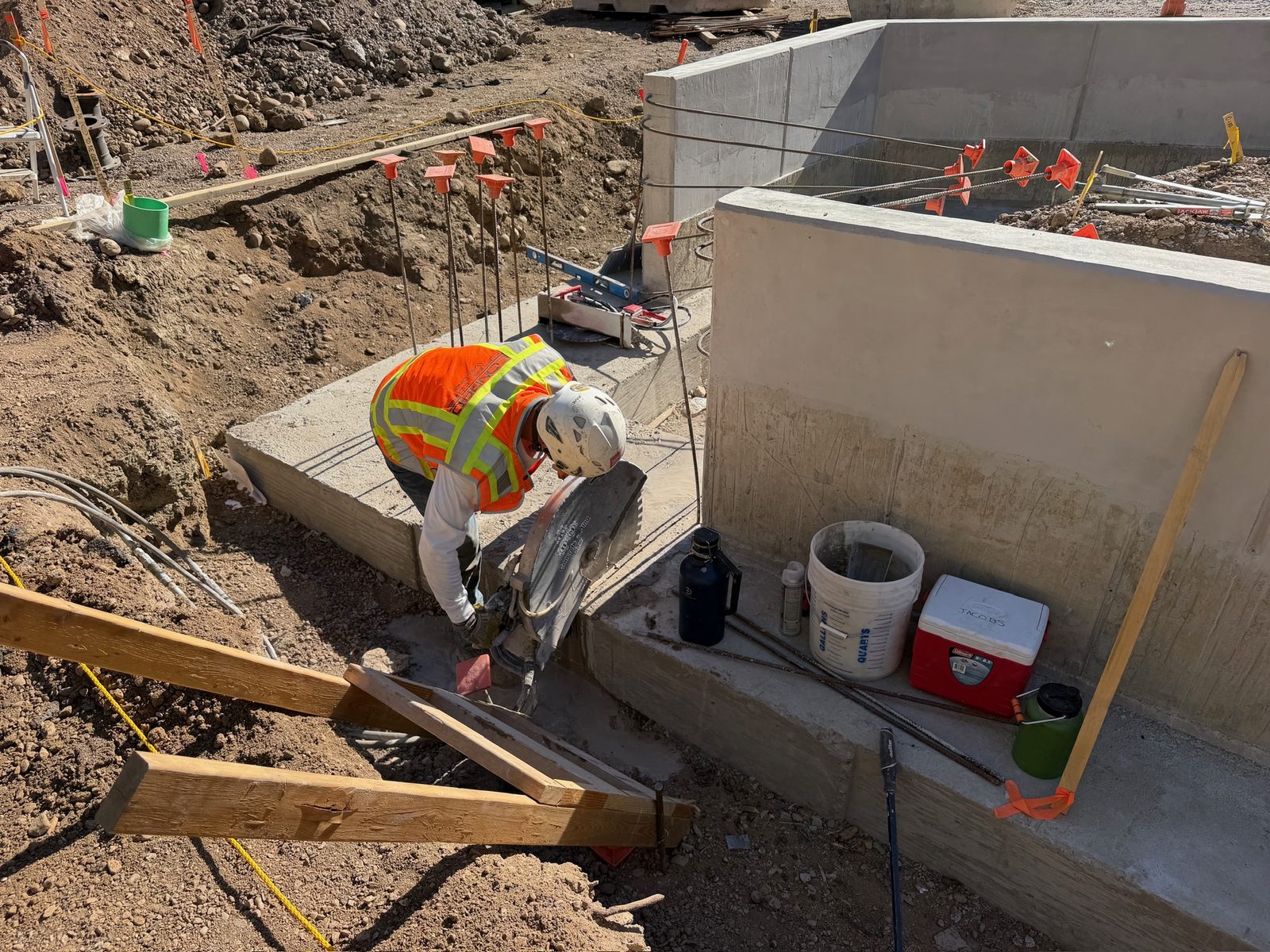
For the cuts a big saw can’t reach: stem walls, corners, work between rebar dowels. We hand-cut between dowels on a stem wall for a joist installation on a tight commercial timeline. Late days, but the dowels stayed intact and the schedule held.
Need round penetrations for pipe, conduit, or duct? That's core drilling, a separate trade. And when the cutting is just the front end of a bigger removal, the scope lives under selective demolition.
Job record
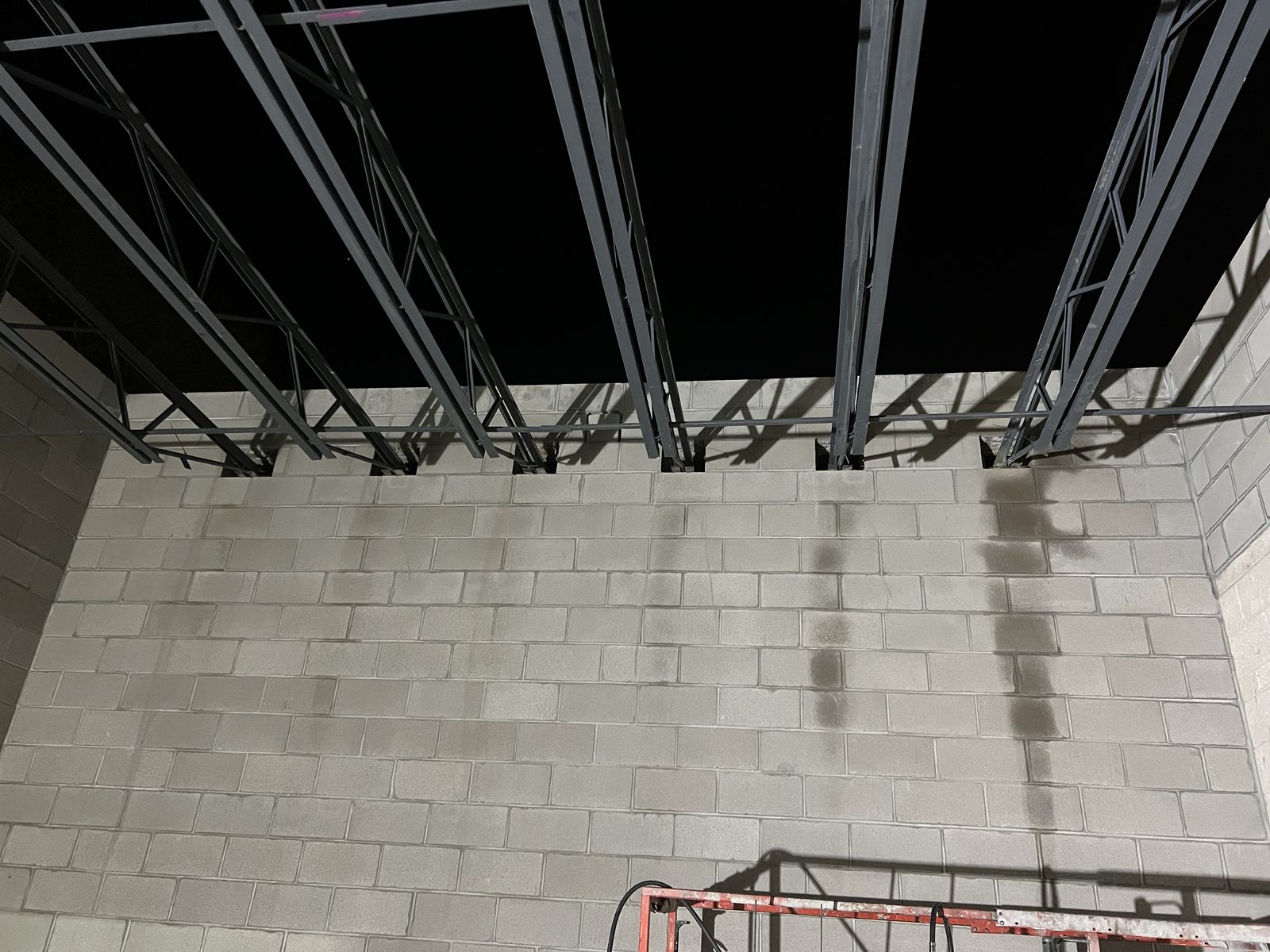
A design bust turned up in a footer that was already poured. High-profile project, every downstream trade waiting on it, and the GC needed the correction made without burning days.
We mobilized after hours and made the correction cuts that night. By morning the bad section was out clean, on the new layout, ready for the carpenters. The client formed and poured the replacement footer without losing the schedule.
Nobody plans for a bust. What matters is how fast it gets fixed and whether the fix is right. If a bust is holding up your pour, call (720) 555-0134.
C-01.2 · Capability
Typical working ranges by method. Depth depends on the blade, the reinforcement, and how much room we have to work, so send the spec and we'll confirm the approach before anyone mobilizes.
| Method | Typical range | Best for |
|---|---|---|
| Slab / flat saw | to ~12 in. typical | Trenches, panel removal |
| Wall saw | to ~24 in. track-mounted | Openings in walls to spec |
| Hand / ring saw | to ~8 in. from one side | Corners without overcuts, tight access |
These are typical numbers, not hard limits. Heavy steel or a tight room changes the answer.
We wet-cut per OSHA Table 1, which keeps silica down where a dry blade would fog the building. The slurry that wet cutting produces gets contained and recovered with vacuums before it reaches a drain or a finished floor. Your janitorial crew should never know we were there.
A lot of our cutting happens in facilities that stay open: warehouses running shifts, medical space, retail. We schedule nights and weekends when the work would disrupt operations, and we walk the containment plan with your super before the first cut. Cutting is usually one piece of a scope that also includes coring and demo; all services shows how the pieces fit.
C-01.9 · Questions
Yes. Most of our interior work is in buildings that stay in use. Wet cutting keeps dust down, containment and vacuum recovery keep the slurry off finished surfaces, and we schedule off-hours when daytime work would disrupt the tenant. Tell us what the building can tolerate and we'll build the plan around it.
We follow OSHA Table 1: wet-cut methods as the default, HEPA extraction where water is not an option. Dust control is part of the pre-task plan, not something the crew improvises on site.
Rebar, yes. Diamond blades go through it as part of a normal cut. Post-tension is a different animal: PT slabs get scanned and the tendons located before a blade touches concrete. We don't cut blind, and the same rule holds for our core drilling layouts.
Routinely. After-hours and emergency cutting is a normal part of our week, not a special request. If the fix has to happen tonight so the pour happens tomorrow, call and we'll talk it through.
On the critical path
Send drawings or a scope description and we'll return a quote. Urgent? Call. We answer.